
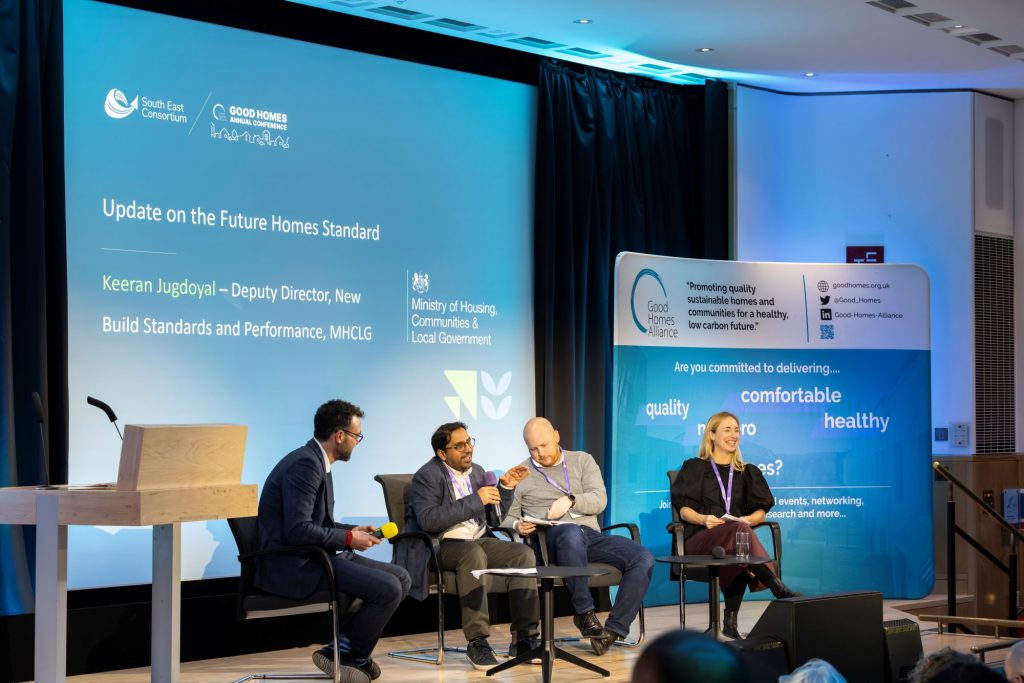
The publication of the Future Homes Standard marks an important milestone for our sector, setting a clearer direction towards homes that are more efficient, less reliant on volatile fossil fuels. However, while the FHS establishes a vital baseline, it must be seen as a floor, not a ceiling. It is also disappointing to see the end of the transition period pushed into 2028.
We are pleased to see the inclusion of requirement of solar panels and heat pumps, but there remain critical gaps that must be addressed if we are to deliver truly high-quality, low carbon homes:
- Healthy homes: Current proposals do not go far enough on ventilation, risking poor indoor air quality.
- Energy affordability: Standards fall short of what is needed to significantly reduce residents’ heating and hot water bills.
- Climate resilience: Overheating, flooding, and water scarcity are already affecting new homes, yet are insufficiently addressed.
- As-built performance: The performance gap persists, highlighting the need for stronger commissioning, testing, and verification.
At GHA, we believe these challenges present an opportunity. Through our upcoming Charter Mark, we are committed to driving the delivery of homes that are not only low carbon, but also healthy, resilient, and genuinely perform in use for those willing to go beyond compliance.
We’ll be providing further response and commentary in the coming weeks.