
Future Homes Hub and Good Homes Alliance publish practical guidance to help landlords, Build-to-Rent operators and lettings and managing agents support residents from first enquiry through to future tenancies
The success of low energy, all-electric rental homes depend on more than how they’re built. As more renters move into homes with technologies such as heat pumps, mechanical ventilation, solar PV and smart time-of-use electricity tariffs, the customer journey is becoming an increasingly important part of helping residents get the best from their home.
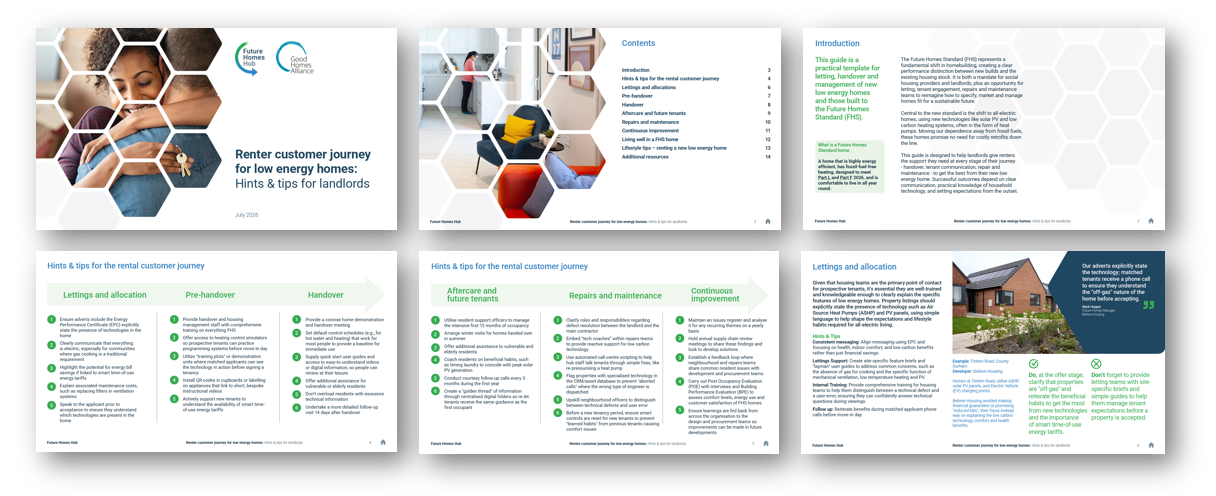
To support the sector, the Future Homes Hub and Good Homes Alliance have today launched its Renter customer journey for low energy homes: hints & tips for landlords – a practical guide to help organisations strengthen every stage of the renter journey, from the first enquiry through to future tenancies.
Unlike homebuyers, renters often have less opportunity to learn about their home before moving in. They rely on landlords, lettings teams and managing agents to help them understand unfamiliar technologies, answer questions and build confidence in how to live comfortably and efficiently in their home.
And because rental homes welcome multiple tenants throughout their lifetime, organisations need a consistent approach that ensures every resident receives the same quality information, support and experience – not just the first occupant.
Rather than treating handover as a single event, the guide encourages organisations to view the customer journey as a continuous process that begins with marketing and lettings and continues through pre-handover, move-in, aftercare, repairs, maintenance and future tenancies.
Ross Holleron, Head of Homes and Construction at the Future Homes Hub, said:
“The industry has made huge progress in improving the performance of new homes. The next step is ensuring residents have the knowledge and confidence to get the full benefit from them.
For renters in particular, the customer journey plays a critical role. They often have fewer opportunities than homebuyers to understand how their home works before moving in and rely on landlords, letting agents and resident-facing teams to support them.
This guide is about helping organisations strengthen those interactions, recognising that every conversation – from marketing and lettings through to repairs and future tenancies – can help residents feel more confident, improve customer satisfaction and support better-performing homes.”
Rather than introducing an entirely new process, the guide offers practical ideas that organisations can embed within their existing customer journeys. These include preparing residents before move-in through short videos and QR codes, helping them build confidence in technologies such as heat pumps and mechanical ventilation over time rather than overwhelming them at handover, using maintenance visits as opportunities to reinforce key messages, and ensuring every future tenant receives the same high-quality onboarding and support throughout the lifetime of the home.
The guide is structured around six stages of the renter customer journey:
- Lettings and allocation
- Pre-handover
- Handover
- Aftercare and future tenants
- Repairs and maintenance
- Continuous improvement
The guide is available to download free from the Future Homes Hub Knowledge Centre.
Hear from the experts
The Future Homes Hub is hosting a webinar on Owning the customer journey, on Friday, 17th July. Click here to sign up now.
The webinar will explore how organisations can strengthen the wider customer journey for both buyers and renters – from marketing, sales and lettings through to handover, aftercare and maintenance. Alongside practical insights from organisations already embedding these approaches, the session will introduce the new renter guidance and explore how customer communication can help residents get the best from low energy, all-electric homes.